2026-11-20
Loft Condensation & Ventilation: Causes, Fixes and When to Get a Survey
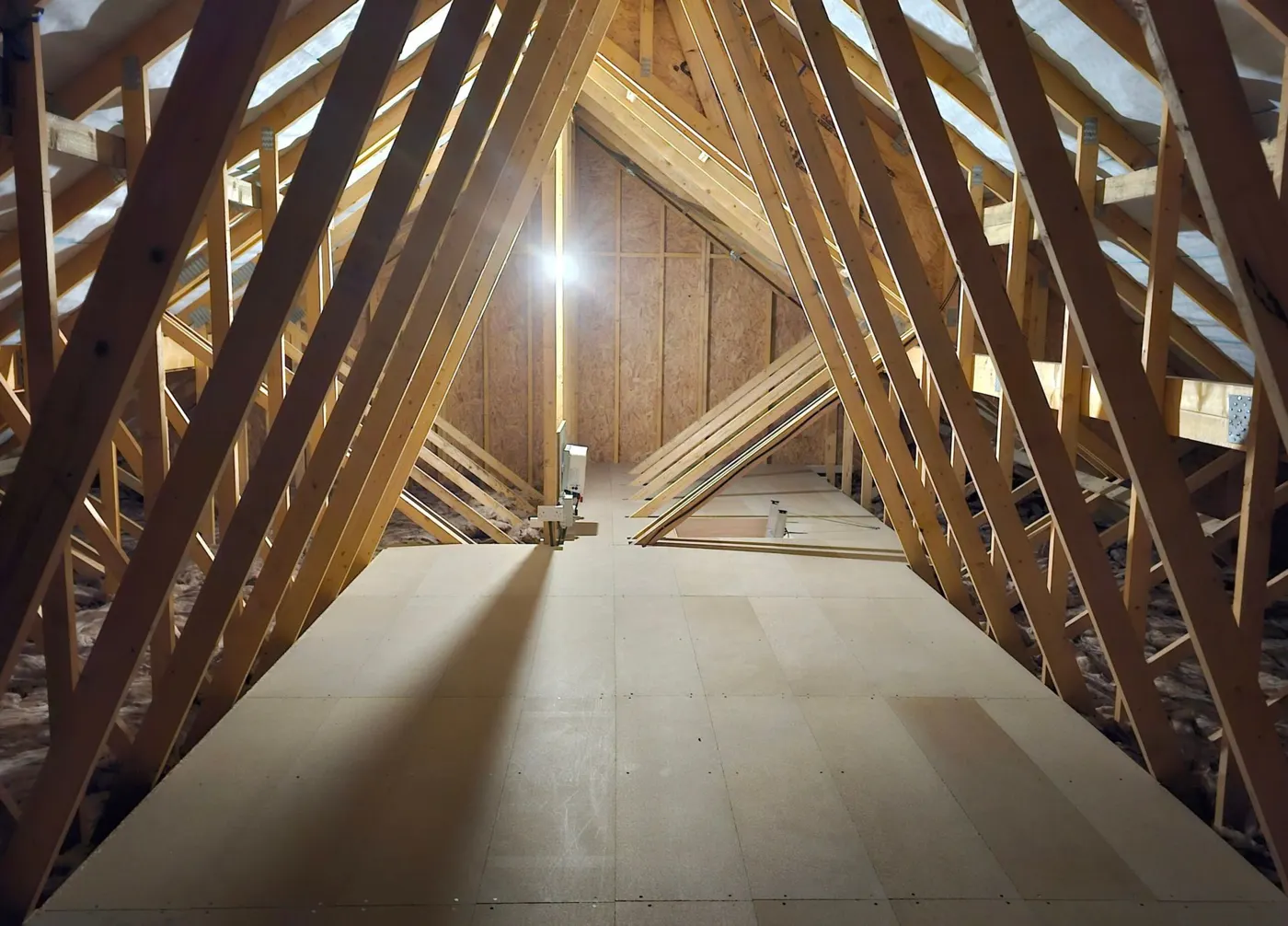
Condensation in a loft usually means warm, moist air from the house is reaching a cold roof space that cannot get rid of it fast enough. The fix depends on where the moisture comes from and how the roof breathes, so a quick look at insulation, ventilation and air leaks is the right first step before buying a dehumidifier or adding more insulation.
Why condensation forms in lofts
Everyday living produces moisture: cooking, showers, drying clothes and breathing. Warm air carries that moisture upwards through gaps around the loft hatch, downlights, pipes and cables. When it meets cold roof timbers, felt or nails it cools and turns to water. Winter nights are when it shows most, which is why so many homeowners first notice it between November and March.
Signs to look for
- Droplets or a damp sheen on the underside of the roof felt or membrane.
- Water dripping onto insulation or stored boxes.
- Black spotting or mould on timbers, rafters or the hatch.
- Rusty nails, a musty smell or damp patches on bedroom ceilings.
Drips can also come from a roof leak, a cracked tile or a plumbing problem. If water appears in one spot regardless of weather, or after rain, get the roof checked; that is not a condensation problem.
Is insulation the cause or the cure?
Good loft insulation keeps heat in the rooms below, so the loft itself becomes colder. That is what insulation is meant to do, but a colder roof space makes ventilation and air-tightness more important. Insulation that is pushed into the eaves can block the airflow a traditional cold loft relies on. Squashed or damp insulation also performs worse.
The Energy Saving Trust recommends keeping the loft ventilated when insulating at joist level. Our loft insulation options are installed to keep eaves clear.
How loft ventilation works
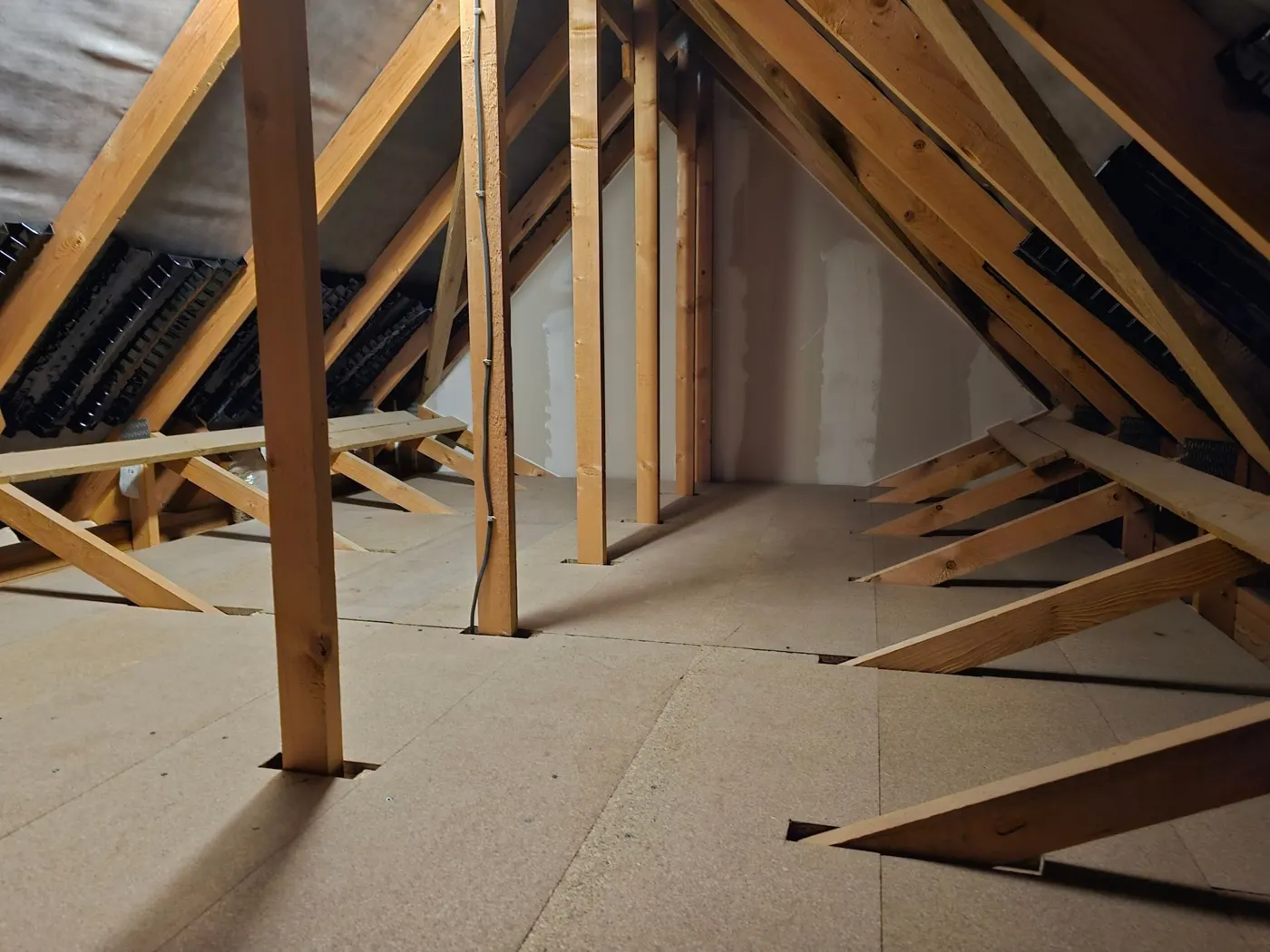
Most older West Midlands homes have a cold loft: insulation sits on the ceiling joists and outside air moves through the roof space via the eaves, gaps in tiles or vents. Newer homes often have a breathable membrane that lets vapour escape. Ventilation methods include:
- Eaves vents and trays, which keep a path open where the roof meets the wall.
- Tile or ridge vents, which let moist air escape near the top of the roof.
- Breathable membranes, used on newer or re-felted roofs.
Which one suits your home depends on the roof covering and how it was built. Adding vents to a roof is roofing work and should be specified for the actual roof.
Does loft boarding cause condensation?
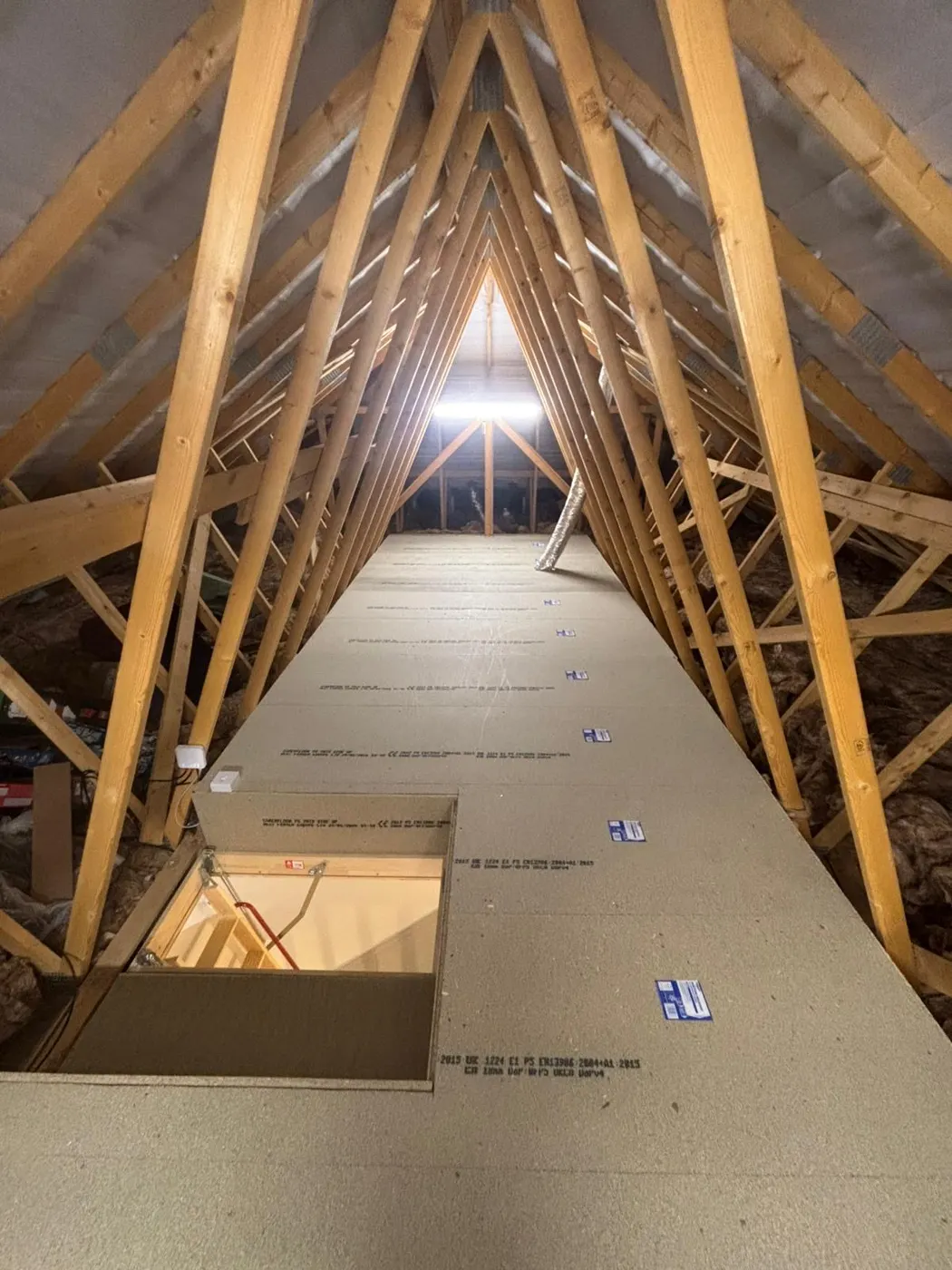
Boarding laid directly on joists can squash insulation and, if it runs into the eaves, block airflow. Raised boarding avoids both. Our raised boarding specification uses a 175mm subframe to protect 270mm insulation. The final floor height depends on the existing joists and insulation; survey measurements confirm the appropriate arrangement. Boards must not compress insulation, block ventilation or obstruct access to services.
See our raised loft boarding service.
Simple things you can check yourself
- Keep the hatch sealed. A draughty hatch lets moist air straight into the loft. An insulated, draught-sealed hatch helps.
- Vent bathroom and kitchen fans outside, not into the loft.
- Clear the eaves. Insulation, boxes or bags should not be packed against the edges of the roof.
- Avoid drying washing indoors without ventilation in winter.
- Check stored items for damp and lift them off the insulation.
A loft dehumidifier can reduce symptoms but does not fix the source of the moisture or blocked ventilation.
When to book a survey
Book a survey if condensation keeps coming back, insulation is wet, timbers show mould, or you plan to board or insulate and want it done without making things worse. During a free Snug Lofts survey we check insulation depth and condition, the eaves, the hatch and how your loft is used, then explain the options. Where roof repairs or new roof vents are needed, we will say so rather than cover the problem up.
What it costs to put right
Common fixes such as clearing eaves, replacing damp insulation and fitting a sealed hatch are quoted after the survey. Our insulation rates are:
| Insulation option | Installation price |
|---|---|
| 100mm Top-Up Insulation | £26/m² |
| 170mm Top-Up Insulation | £30/m² |
| 200mm Top-Up Insulation | £34/m² |
| 270mm Full Loft Insulation | £40/m² |
| 300mm Full Loft Insulation | £48/m² |
| 400mm Super Warmth Insulation | £58/m² |
Snug Lofts offers a lifetime workmanship warranty. This concerns installation workmanship, not the lifetime of every product, insurance for the roof or a guarantee of a mortgage decision. Ask for the written terms with your quote.
Want an idea first? Use the instant quote, then confirm the work at your free survey.
Sources
Reviewed 20 November 2026 using Energy Saving Trust loft insulation guidance. Snug Lofts prices come from our published installation options.
Need easier loft access? See our loft ladders & hatches.